Showing posts with label Iraq War. Show all posts

Tuesday, April 9, 2013

Remembering The Fall Of Baghdad 10 Years Ago


On 10-Year Anniversary Of Baghdad's Fall, Iraqis Remain Torn -- Jane Arraf, Christian Science Monitor

Many Iraqis are glad Saddam Hussein is gone, but still grieve about what followed.

Ferdos square, where Saddam Hussein's statue stood until toppled by jubilant Iraqis on this day in 2003, was largely deserted today. Elsewhere in the capital, Baghdad residents struggled to get to work on streets choked with traffic and blocked by concrete walls and security checkpoints.

Iraqis have largely shrugged off the 10-year anniversary of the fall of Baghdad, even as they struggle still with the fallout of the US invasion: heightened security measures, ongoing violence, and a country much more divided than it was a decade ago.

Read more ....

More News On The Ten Year Anniversary On The Fall Of Baghdad 10 Years Ago

Baghdad residents view 10-year anniversary of city’s fall with grief, relief -- Washington Post/AP
Iraq quietly marks decade since fall of Baghdad -- Global Post/AFP
Iraq marks decade since fall of Baghdad -- Al Jazeera
10 years ago today: Saddam Hussein statue toppled in Baghdad
-- MSNBC
Ten Years Since 'Fall Of Baghdad' -- Radio Free Europe
Iraqis Debate Impact of War -- Voice of America
The long shadow of the Iraq war -- Deutsche Welle
Ten Years After Baghdad's Fall, a Look Back at the Iraq War -- Justin Scuiletti, PBS Newshour

Marine Refuses To Lend The American Flag That Covered Saddam's Statue Before It Fell 10 Years Ago


Marine Refuses To Lend Military The American Flag That Covered Saddam’s Statue -- Gawker

Ten years ago today, TV carried one of the most iconic, if stage-managed and misremembered, images of the invasion of Iraq: Moments before toppling the statue of Iraqi dictator Saddam Hussein in Baghdad's Firdos Square, several Marines used a United States flag to cover Saddam's face before prudently swapping it for an Iraqi standard.

In anticipation of that anniversary, the National Marine Corps Museum in Quantico, Virginia, went looking for the American flag, hoping to put it on display. But the flag's keeper, former Lt. Tim McLaughlin, has told the Corps he won't provide it, because he doesn't want it used for pro-war propaganda.

Read more ....

Update: Flag that covered Saddam’s face stashed in N.H. safety deposit box -- Salon

My Comment: I say .... let him keep his flag .... he did his tour and duty.

Tuesday, March 19, 2013

The Question That Should Have Been Asked 10 Years Ago

U.S. Marines from 1st Platoon, Alpha Company, 1st Battalion, 7th Marine Regiment patrol from Expeditionary Patrol Base Dulab to a ridge along the outskirts of Dulab, Iraq, Sept. 26, 2007. The Marines are working with Iraqi police in support of Operation Iraqi Freedom in the Al Anbar province of Iraq. U.S. Marine Corps photo by Cpl. Shane S. Keller

“No one from the intelligence community, anyplace else ever came in and said, ‘What if Saddam is doing all this deception because he actually got rid of the WMD and he doesn't want the Iranians to know?' Now somebody should have asked that question. I should have asked that question. Nobody did. Turns out that was the most important question in terms of the intelligence failure that never got asked.”

— Stephen Hadley, President George W. Bush's national security adviser, speaking at a "Foreign Policy" confab last week on the U.S. invasion of Iraq, launched 10 years ago this week.

From Battleland.

Remembering The Start Of The Iraq War 10 Years Ago


10 Years Ago, The U.S. Invaded Iraq -- Kenneth T. Walsh, US News and World Report

Any time that the president orders U.S. troops into harm's way, it's an important moment for America. And it's always a fact of life that no one can know how a battle, or a war, will turn out until the fighting actually begins.

But the start of the Iraq war 10 years ago was different. President George W. Bush and his spokesmen predicted with unusual aggressiveness that America would prevail relatively easily, and Bush strategists forecast that the Iraqis would welcome their liberators with open arms as they headed to a bright future.

Read more
....

More News On Remembering The Iraq War On The Tenth Anniversary Of The Invasion

Ten years in Iraq -- Al Jazeera
Obama pays tribute to troops on Iraq War anniversary -- USA Today
On anniversary of Iraq war, Obama salutes US soldiers who served -- Washington Post
Obama walks fine line on Iraq war anniversary -- Politico
10 Years After the Iraq Invasion -- ABC News
Lessons From Iraq War: Army Leaders Meet on 10th Anniversary -- Wall Street Journal
10 years later, Iraq War vivid for troops, civilians -- USA Today
Iraq War 10 Years Later: Where Are They Now? -- NBC
Iraq 10 years on: photographing the war
-- The Telegraph
Iraq war 10 years on: the museum's story - video -- The Guardian
Iraq in Photos: Then and Now -- ABC News
Iraq invasion: 10 years later (Photo Gallery) -- CBS

Commentaries, Opinions, Editorials, And Analysis On The Iraq War


Muddling Through is Not Enough: Why U.S. Needs a New Iraq Policy -- Eli Sugarman, The Diplomat

A decade after the invasion, America’s “one-Iraq” policy is pulling the country apart. Supporting the Kurds is the key to saving it.

March 19th marks the ten-year anniversary of the beginning of Operation Iraqi Freedom. Iraq has largely fallen off the United States foreign policy agenda since U.S. troops left the country at the end of 2011. Meanwhile, Washington has embraced a passive “one-Iraq” policy that derives its name from its emphasis on the importance of keeping Iraq unified – as a single country – and managing its ethno-sectarian fault lines through its Constitution.

Read more ....


Commentaries, Opinions, Editorials, And Analysis On The Iraq War

Mixed Views in Iraq on 10th Anniversary of US-Led Invasion
-- Scott Bobb, Voice of America
Army Brass On Iraq Anniversary: Shock And Awe? Never Again -- Sydney J. Freedberg Jr., Aol Defense
How The American People Were Sold The Iraq War
-- Paul Szoldra, Business Insider
What Saddam’s ouster achieved -- Amir Taheri, New York Post
What did we learn from Iraq? -- Doyle McManus, Baltimore Sun
Iraq war: Was it worth it? -- Cami McCormick/CBS
Was Iraq Worth It? -- Patrick Buchanan, Human Events
Trying to Put Iraq Back Together -- Mark Thompson, Time
Five valid Iraq critiques and five debates that still matter -- Peter Feaver, Shadow Government/Foreign Policy
Blair: Syria justifies our removal of Saddam -- The Telegraph
Iraq: What I Got Wrong, and What I Still Believe -- Jonathan Chait, New York Magazine
Iraq, a decade after U.S. invasion, torn between progress and chaos -- Ernesto LondoƱo, Washington Post
History and the blame game ten years after Iraq
-- James Jay Carafano, FOX News
In Iraq, a tyrant was toppled - and then no one was in charge -- Andy Nelson, Christian Science Monitor
10 years later: The Iraq war's lasting impact on U.S. politics -- Stephanie Condon/CBS
'The dead family I just can't forget': War reporter returns to Iraq on 10th anniversary of conflict to find father who begged for freedom... and then lost SEVENTEEN of his relatives -- Daily Mail
Iraq, 10 years on: Did invasion bring 'hope and progress' to millions as Bush vowed? -- F. Brinley Bruton and Ghazi Balkiz, NBC News
The Iraq war: Decade of regret -- The Economist
The slow road back -- The Economist
Ten Years After Iraq Invasion, War Does Not Look Like A Noble Endeavor -- Maura Pennington, Forbes
Baghdad, A Decade Later
-- Kelly McEvers, NPR
Iraqi democracy was not so bad - until US pulled out -- Reidar Visser, The National
Iraq isn’t as fragile as it looks -- Lowell Schwartz, Special to CNN
Iraq, 10 years later: A people in need -- Rebecca Angel Baer, CNN
Army veteran still thinks about Iraq War 'every single day' -- McClatchy News
6 Predictions Days Before the Iraq War
-- Paul D. Shinkman, US News and World Report
An 'Absolute Will To Forget': Iraq Casts Shorter Shadow Than Vietnam -- Alan Greenblatt, NPR
Iraq 10 years on: the myth of 'shock and awe'
-- The Telegraph

Thursday, March 14, 2013

Iraq War Costs U.S. More Than $2 Trillion


Iraq War Costs U.S. More Than $2 Trillion: Study -- Reuters

(Reuters) - The U.S. war in Iraq has cost $1.7 trillion with an additional $490 billion in benefits owed to war veterans, expenses that could grow to more than $6 trillion over the next four decades counting interest, a study released on Thursday said.

The war has killed at least 134,000 Iraqi civilians and may have contributed to the deaths of as many as four times that number, according to the Costs of War Project by the Watson Institute for International Studies at Brown University.

When security forces, insurgents, journalists and humanitarian workers were included, the war's death toll rose to an estimated 176,000 to 189,000, the study said.

Read more ....

Update: Iraq war cost US more than $2 trillion – study -- RT

My Comment
: Add in interest, health, and disability costs .... the final cost may approach a staggering $6 trillion. Depressing numbers throughout. The Costs of the Wars report is here.

Monday, March 11, 2013

60 British Special Forces Soldiers Against 100,000 Iraqi Soldiers

The Great Escape -- Toby Harden, Real Clear World/The Times

The men of the Special Boat Service’s M Squadron were used to the unexpected, but as their brigadier detailed their mission, they looked at each other in silent disbelief. It was almost a decade ago and they were gathered in a “forward mounting base” in the Middle East, the location of which still cannot be disclosed.

For weeks the men had known they would be going to war with Iraq. While frantic discussions were taking place at the United Nations in New York, the SBS team had been training on the plains of Kenya in preparation for driving through a desert behind enemy lines.

Read more
....

My Comment: A riveting report on what is basically a "run for your' life story while under withering fire. It is amazing that this fiasco did not cost the lives of all of the British soldiers. There is no mention in this report on whether or not any superior officers were "canned" for this disaster.

Thursday, March 7, 2013

Guardian/BBC Report: U.S. Secret Detention And Torture Centres Were More Widespread In Iraq Than What Was Reported


Revealed: Pentagon's Link To Iraqi Torture Centres -- The Guardian

Exclusive: General David Petraeus and 'dirty wars' veteran behind commando units implicated in detainee abuse

The Pentagon sent a US veteran of the "dirty wars" in Central America to oversee sectarian police commando units in Iraq that set up secret detention and torture centres to get information from insurgents. These units conducted some of the worst acts of torture during the US occupation and accelerated the country's descent into full-scale civil war.

Colonel James Steele was a 58-year-old retired special forces veteran when he was nominated by Donald Rumsfeld to help organise the paramilitaries in an attempt to quell a Sunni insurgency, an investigation by the Guardian and BBC Arabic shows.

Read more ....

My Comment: If true .... this is a very disturbing report. The full report/documentary is here.

Friday, September 28, 2012

The Red Team's 2005 Report On Iraq

U.S. Army Spc. Deonty Eastmon secures his sector during a patrol through Al Betra, Iraq, Nov. 26, 2007, as the rest of his squad asks local residents about recent insurgent activity. Eastmon is assigned to the 101st Airborne Division, 1st Battalion, 187th Infantry Regiment. U.S. Air Force photo by Tech. Sgt. Adrian Cadiz

About That Red Team Report… -- George W. Casey, Foreign Policy

Michael R. Gordon's story overstates the importance of a review I ordered on Iraq.

Michael Gordon's attempt to represent the August 2005 Red Team report as a missed opportunity to shorten the war is wishful thinking and not supported by the realities we were wrestling with in Iraq at that time.

The report was one of many Red Team reports chartered by me, and by the U.S. ambassadors and me, to provide us alternative views and to cause the U.S. civilian and military leadership in Iraq to come to grips with the difficult issues confronting the mission. These reports were one of many inputs the ambassador and I used to build our understanding of the environment and to shape our guidance to the U.S. Mission and Multinational Force. We used this particular report to help us shape a December 2005 joint statement of our mission for 2006, and to prepare a joint campaign plan that we issued in April 2006. We also used it as the impetus to implement a joint planning and assessment process that significantly improved our ability to integrate our efforts in 2006 and beyond. The idea that it was "ignored by generals" is not true. I didn't agree with all of it, but I did not ignore it.

Read more ....

My Comment: As I said in my own post on this story a few days ago .... Coulda ... woulda .... shoulda ....


We are all geniuses with hindsight .... but in real time we must always second guess with the information that we have .... and sometimes we get it right .... and sometimes no. In Iraq .... by the time that we had figured it out .... it was too late.

Sunday, September 9, 2012

The CIA's Failure On Iraq's 'Weapons Of Mass Destruction'

At the UN, Colin Powell holds a model vial of anthrax, while arguing that Iraq is likely to possess WMDs. Wikipedia

Did The CIA Just Mess Up On Iraq's 'Weapons Of Mass Destruction'? -- Brad Knickerbocker, Christian Science Monitor

Recently-declassified CIA documents blame 'analyst liabilities' for mistakenly concluding that Saddam Hussein had chemical, biological, and nuclear weapons programs – the rationale for invading Iraq. But some say the situation was more sinister.

Remember those “weapons of mass destruction?” How chemical, biological, and nuclear weapons programs were said to be part of Saddam Hussein’s arsenal – posited as the rationale for invading Iraq in the wake of 9/11, along with the belief that the Iraqi dictator somehow was helping Al Qaeda?

After a massive US-led invasion in 2003 and 4,486 American service men and women lost in Iraq over the years, the images remain:

Read more ....

My Comment: I am skeptical of claims that there was a disinformation campaign within the intelligence community to advocate for an invasion of Iraq. The debate on Saddam Hussein's WMD program goes back to the first Gulf war, and the general consensus among everyone (Europeans, both political parties in Washington, nuclear inspectors, etc) .... then and just before the second Gulf war .... was that Saddam Hussein's WMD program was very real.

It was not .... and the blame for this colossal intelligence failure should fist go to the intelligence community, (second) to the politicians who failed in providing the proper oversight, and (three) to President (Bush) who made the final decision to go to war.

Thursday, September 1, 2011

US Has First Fatality-Free Month In Iraq

United States Army soldiers conducted a patrol on Monday with Iraqi soldiers in Sadiya, near Baquba, in search of men suspected of planting explosives. Joseph Sywenkyj for The New York Times


Iraq War Marks First Month With No U.S. Military Deaths -- New York Times


BAGHDAD — Under increased pressure from the United States, an Iraqi crackdown on Iranian-backed Shiite militias has helped produce a previously elusive goal: For the first time since the American invasion of Iraq, an entire month has passed without a single United States service member dying.


The milestone is particularly remarkable because it comes after 14 troops were killed in July, making it the most deadly month for the Americans in three years, and it has occurred amid a frightening campaign of suicide bombings and assassinations from Sunni insurgents that killed hundreds of Iraqis, resurrecting the specter of the worst days of sectarian fighting.


Read more ....


More News On The First Month Where There Has Been No U.S. Fatalities In Iraq


First fatality-free month for US military in Iraq -- AFP

US Military Has First Fatality-Free Month In Iraq -- Radio Free Europe

Iraq: US troops' first fatality-free month since 2003 -- BBC

Iraq War marks first month with no U.S. military deaths -- Stars and Stripes

August the First Month of Iraq War With No U.S. Military Deaths -- National Journal

August: No U.S. troop deaths in Iraq -- UPI

No U.S. troops killed in Iraq for first month since invasion -- CNN

FACTBOX-Security developments in Iraq, August 31 -- Alertnet

Monday, August 15, 2011

Dozen Bombing And Shooting Attacks Struck Iraq Monday


Bomb Blasts Rock Iraq, Kill 69, Wound More Than 180 -- CNN


Baghdad (CNN) -- More than a dozen bombing and shooting attacks struck Iraq Monday, killing at least 69 people and wounded more than 180, authorities told CNN.


It was the worst wave of violence to strike the country in months, coming just weeks after Iraq's political leaders agreed to request U.S. troops stay beyond a January 1, 2012, deadline to withdraw.


Ministry of Interior officials called on security forces to ban people from parking their vehicles on the streets of cities targeted in the attacks, saying they feared more violence.


Read more ....


More News On Today's Violent Attacks In Iraq


Multiple attacks rip through Iraq leaving at least 60 dead
-- L.A. Times

Iraq bomb blasts kill more than 50 -- The Guardian

Wave of Attacks in Iraq Leaves at Least 57 Dead -- New York Times

Nearly 70 killed in attacks across Iraq -- Washington Post

Iraq Suffers Most Significant Attacks in Months, Dozens Dead -- Gather News

Iraqi cities hit by deadly wave of violence -- BBC

Dozens Killed In Iraq Bombings -- Radio Free Europe


My Comment
: In the midst of all of this mayhem and sectarian violence, the Iraqi VP firmly believes that the security situation will improve once US forces are out of the country. Cough .... cough .... yeah right.

Sunday, July 31, 2011

A Story Of Hope From Iraq

Captain Tom Hickey (R) speaks with Mohammad Adnan with his daughter Sadeel at the table. A colleague of Captain Hickey is between them. Hickey helped save Sadeel's life in 2007 when his soldiers rushed her to hospital after she was shot in the Baghdad neighborhood of Amariyah. Jane Arraf

A US Soldier Reunites With The Iraqi Girl He Saved -- Christian Science Monitor

For US Army Capt. Tom Hickey and his platoon, saving Sadeel in 2007 was the best part of their tour in Iraq.

Eight-year-old Sadeel giggles and holds up her curly black hair, revealing the faint scar from a bullet wound.

"I'm so happy to see you," says US Army Capt. Tom Hickey, sounding nervous and slightly overwhelmed. It's the first time the two have seen each other since he helped rush her to the hospital four years ago, her body seemingly lifeless in her father's arms. "I don't know if you remember me. It was a long time ago," he says, looking at the lively little girl across the table.

Read more ....

My Comment: After reading this story ... what can I say but read it all and remember.

Monday, April 18, 2011

Was Oil The Main Reason For Invading Iraq? New Documents Question The Official Reason

A British Army soldier investigates a large fire near Basra's Shuiba refinery. Reuters

Secret Memos Expose Link Between Oil Firms And Invasion Of Iraq -- The Independent

Plans to exploit Iraq's oil reserves were discussed by government ministers and the world's largest oil companies the year before Britain took a leading role in invading Iraq, government documents show.

The papers, revealed here for the first time, raise new questions over Britain's involvement in the war, which had divided Tony Blair's cabinet and was voted through only after his claims that Saddam Hussein had weapons of mass destruction.

Read more
....

My Comment:
Were there discussions on Iraq's oil reserves before the invasion .... I would be surprised if there was not. But was this the primary reason on why the invasion was done .... I would be saying no. In fact, if I was to compile a list of reasons on why there was an invasion, I would place Iraq's oil riches at number 3 and 4 with WMDs, Saddam Hussein's support of terror groups and his history of invading his neighbors, and a determination to change the political culture in the Middle East as being the main reasons why the decision to invade Iraq was made.

Tuesday, February 15, 2011

Iraq Defector Admits To Lying About WMDs In Iraq That Led To The U.S. Invasion In 2003

Curveball's lies were used by the former US secretary of state Colin Powell to argue the case for the Iraq war. Photograph: David Levene for the Guardian

Defector Admits To WMD Lies That Triggered Iraq War -- The Guardian

• Man codenamed Curveball 'invented' tales of bioweapons
• Iraqi told lies to try to bring down Saddam Hussein regime
• Fabrications used by US as justification for invasion

The defector who convinced the White House that Iraq had a secret biological weapons programme has admitted for the first time that he lied about his story, then watched in shock as it was used to justify the war.

Rafid Ahmed Alwan al-Janabi, codenamed Curveball by German and American intelligence officials who dealt with his claims, has told the Guardian that he fabricated tales of mobile bioweapons trucks and clandestine factories in an attempt to bring down the Saddam Hussein regime, from which he had fled in 1995.

Read more ....

More News On Faulty Intelligence Leading To The Iraq War

Curveball: How US was duped by Iraqi fantasist looking to topple Saddam
-- The Guardian

Curveball's lies – and the consequences
-- The Guardian
Curveball and the manufacture of a lie -- The Guardian

Defector admits 'fabricating' Iraq WMD intel -- AFP
Iraqi Says He Made Up Tale of Biological Weapons Before War -- New York Times
'Curveball': I lied about WMD to hasten Iraq war -- MSNBC
Iraqi Defector 'Curveball' Admits WMD Lies, Is Proud of Tricking U.S. -- ABC News
Iraqi defector responsible for prompting Bush to invade Iraq admits he made up WMD claims -- New York Daily News
"Curveball" Confesses to Lying on Iraqi WMD -- Global Security Newswire
Defector 'Curveball' admits he lied about Iraqi WMD -- USA Today
Defector who told the West about Saddam's weapons of mass destruction admits he lied -- The Daily Mail

Saturday, October 23, 2010

How Al Qaeda's Iraq Chief Evaded Capture For 15 More Months Of Warfare

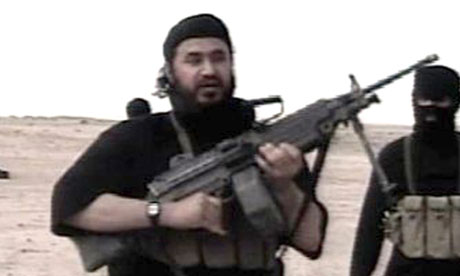
Abu Musab al-Zarqawi in an undated video image released by the US military.

Iraq War Logs: British Blunder May Have Let al-Qaida Kingpin Zarqawi Go Free -- The Guardian

Helicopter ran out of fuel, allowing Bin Laden's Iraq chief to evade capture for further 15 months, secret military logs suggest.

British troops came close to capturing al-Qaida's top commander and the occupation forces' most wanted target in Iraq – but the operation collapsed after the only surveillance helicopter ordered to monitor him ran out of fuel and had to return to base, secret military intelligence logs suggest.

Read more ....

My Comment: In today's era of budget and procurement cutbacks, I doubt that the British army would even have a helicopter to conduct such a mission .... let alone fuel.

Iraqi Army Engaging A Sniper Along Sadar St. Fallujah (Video)


Hat Tip: Theo Spark

Tuesday, November 24, 2009

Three Navy Seals To Be Court Marshalled On How They Captured One Of Iraq's Most Wanted Terrorists


Navy SEALs Face Assault Charges for Capturing Most-Wanted Terrorist -- FOX News

Navy SEALs have secretly captured one of the most wanted terrorists in Iraq — the alleged mastermind of the murder and mutilation of four Blackwater USA security guards in Fallujah in 2004. And three of the SEALs who captured him are now facing criminal charges, sources told FoxNews.com.

The three, all members of the Navy's elite commando unit, have refused non-judicial punishment — called an admiral's mast — and have requested a trial by court-martial.

Ahmed Hashim Abed, whom the military code-named "Objective Amber," told investigators he was punched by his captors — and he had the bloody lip to prove it.

Read more ....

My Comment: I am completely speechless.

Friday, November 6, 2009

Coming Soon: ‘The Surge — The Untold Story’

Understanding the Surge - The Trailer from ISW on Vimeo.


From Big Hollywood:

Earlier this year, I met with Washington’s Institute for the Study of War (ISW), a non-partisan, non-profit public policy research organization, with some of the most accomplished academics in the field of military affairs. ISW wanted to produce a military history in the form of a documentary film. The purpose was to bring greater understanding of the real story behind the Surge in Iraq — the story the mainstream press often misses, or simply doesn’t have time to tell. Surprisingly, though there were a handful of good books on the Surge, there hadn’t yet been a definitive documentary film. Now, The Surge: the Untold Story is the only documentary of its kind giving audiences a look into the Surge, as told by top U.S. military commanders.

Read more ....

Monday, October 26, 2009

Fallout From A Day Of Carnage In Baghdad

Smoke billows from an explosion near the Justice Ministry in central Baghdad. (Sabah Arar / AFP/Getty Images / October 25, 2009)

Baghdad Bombings Death Toll Rises To 155 -- Yahoo News/Reuters

BAGHDAD (Reuters) – The death toll from Sunday's two suicide bombs in Baghdad, one of Iraq's bloodiest attacks in years, has risen to 155 with more than 500 wounded, police said on Monday.

Despite a drop in overall violence in the country, insurgents, militants and others still carry out bombings and shootings, which observers say may increase in the lead up to a national election in January.

Read more ....

More News On Iraq

Iraq steps up Baghdad security after massive bombs -- AP
Bombings Rock Iraq's Political Landscape -- Washington Post
Iraq Bombings, Deadliest Since 2007, Raise Security Issue -- New York Times
Death toll rises to 160 in Baghdad bombings -- CNN
Funerals begin as death toll rises to 155 in Iraq bomb attack -- Times Online
Iraqis blame politics for Baghdad bombs -- Reuters
Baghdad Bombings: Iraqis at the Scene Blame Political Parties -- Christian Science Monitor
Some of the deadliest attacks in Iraq -- AP
Analysis: Baghdad blasts bode ill for Barack Obama's withdrawal plan -- The Telegraph
Iraq bombs are an explosive message -- The Guardian opinion
Baghdad blasts expose Maliki limits -- Financial Times
A Resilient Baghdad on a Day of Horror -- David Ignatius, Washington Post opinion